THE NATIONAL GALLERY:
A HISTORY
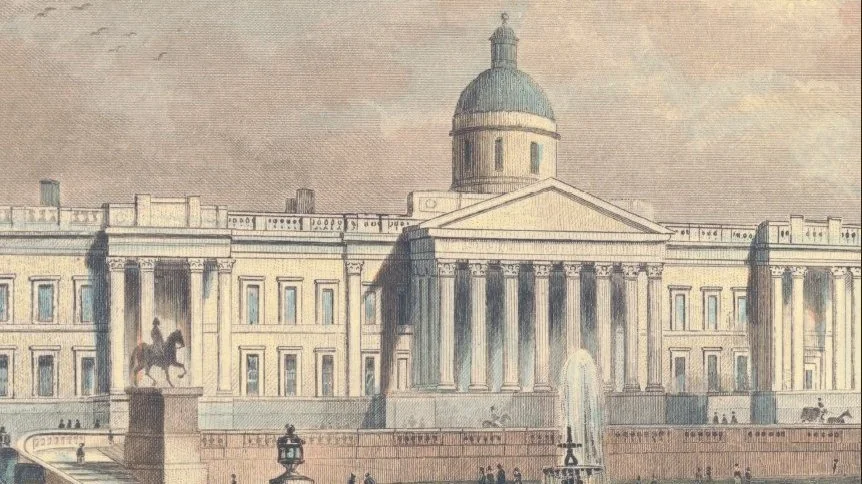
Commissioned by the National Gallery as part of their NG200 celebrations.
For 200 years the National Gallery has been at the heart of the nation’s life. Established in 1824 and situated in the centre of London, with a commitment to free admission, it was conceived as a gallery to be enjoyed by all, while also serving as a place of refuge in times of war and crisis. The National Gallery: A History tells the story of an institution that holds education, social cohesion and national heritage at its core, and whose outstanding collection has shaped the art historical canon over two centuries.
Interchapters addressing fifteen highlight paintings afford an opportunity to explore changes in taste over the decades, as well as the reactions of visitors to the Gallery’s great works of art.
MY NATIONAL GALLERY
-
The film has been seen on the screens of more than three hundred cinemas in the UK, as well as movie houses in the United States and other countries. Michael Palin, Terry Gilliam, HRH Princess Eugenie, Claudia Winkleman as well as members of the Gallery's own staff each introduce a single painting that means something special to them, a work they have been drawn to, again and again.
I appear a several points in the film, providing historical background as well as reflections on how the Gallery can satisfy an appetite for the authentic that ever-expanding virtual experiences fail to satisfy. Unfortunately I did not have the chance to introduce my own favourite painting, something I have made up for in the next section.
MY FAVOURITE PAINTING
-
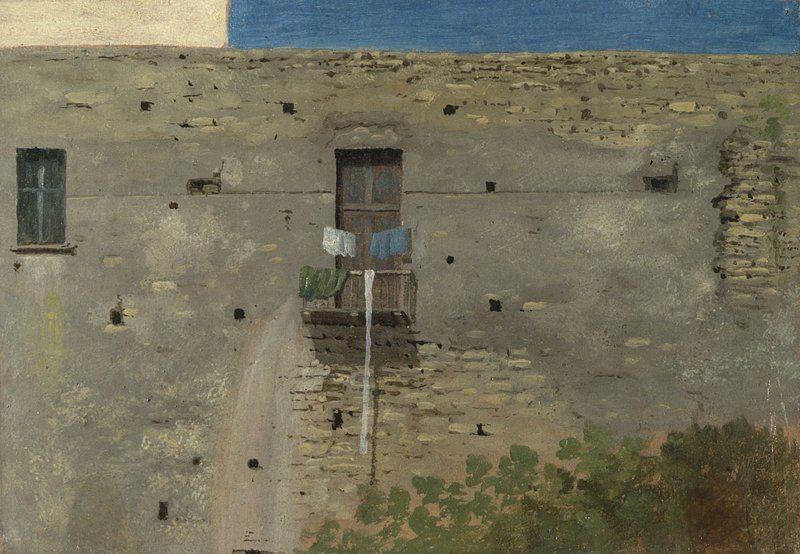
My job was to explain the Gallery's role in national life, past and present. Had I been given the opportunity to pick a single painting, it would have been this one, A Wall in Naples by the eighteenth-century Welsh artist Thomas Jones. It is a small painting, just eleven centimetres or four inches tall.
I am a big fan of the still lifes of the twentieth-century Italian artist Giorgio Morandi, which consist of successive rearrangements of otherwise unremarkable pots, painted in muted tones. Morandi also painted the view outside his studio-cum-bedroom, located in Bologna rather than Naples.
Like Morandi, Jones has clearly thought hard about the cropping. The sky and the wall are at the same time patches of carefully-proportioned colour. Jones is also interested in the people who live behind the closed shutters on the balcony opposite. We do not see them, but their daily routines have left their marks on the wall. You can tell from the stains that they have the habit of throwing buckets of liquid off their balcony. What liquid isn't something we want to get into here. Each time I visit I wonder if, this time, I might actually catch them enjoying the view. But its always too hot. They have sensibly decided to remain inside for now.
BEHIND THE BOOK
Although this history was written from scratch and drew on new research, I did have form: in 2006 I published The Nation's Mantelpiece, which became the first history of the National Gallery ever published. I completed a doctoral thesis on the foundation and early years of the Gallery at Cambridge in 2002. A post-doc position at Sidney Sussex College, Cambridge, allowed me to research the later history, taking the story down to the 1970s. When that fellowship ended in 2005 I moved to Kennington in south London, where I was the lodger of Giles Waterfield for several years. It was during this time that I published Mantelpiece and began teaching at the University of Southampton.
A former director of Dulwich Picture Gallery, Giles rented me his spare room in the expectation that I would "play away", as he put it. Instead I hung around the place. Giles kindly included me in his many dinner parties, introducing me to his friends and colleagues in the art world. Like them, I became rather concerned that I might end up immortalized in one of the historical novels he wrote, such as The Hound In The Left-Hand Corner (2002), a roman à clef that neatly spears the British museum world. I only appeared (to my knowledge at least), in a series of short fables starring an idiot (idiot savant, I like to think) named "Jon-Boy". Giles was surprisingly familiar with American culture, and so I am sure this was a reference to the television series The Waltons. Presumably Giles felt that I shared a certain earnest gormlessness with the Jon-Boy of that popular series.
The National Gallery: A History is dedicated to Giles, whose sudden death in 2016 robbed me and many others of a mentor and friend. I dread to think what Giles would make of this website.